Interesting facts
The name ‘Annastraße’
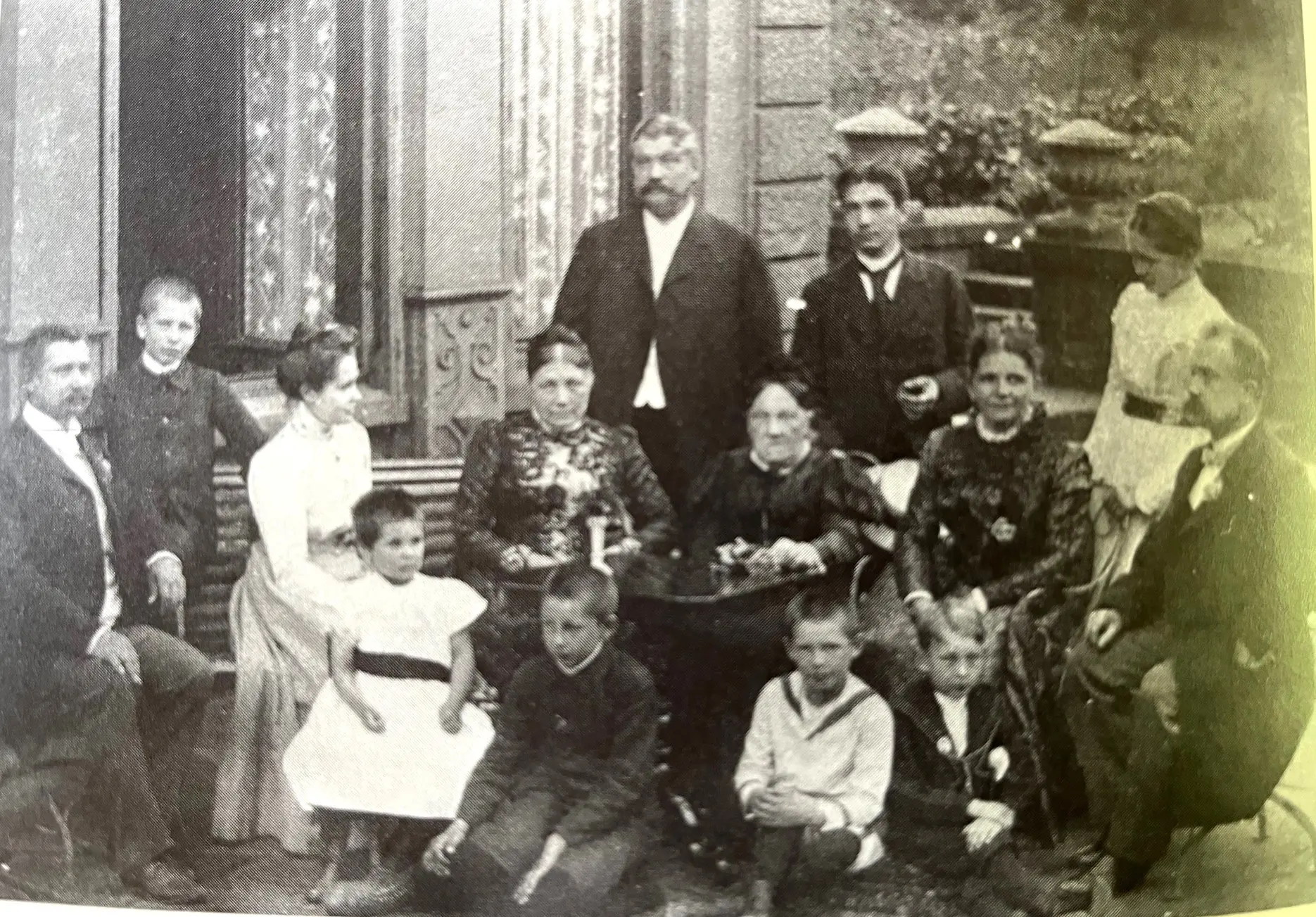
Annastraße takes its name from Anna Spangenberg, née Hoffmann (*21 March 1850 – married 29 July 1871 – † 20 June 1916). She was the wife of Alexander Spangenberg (born 13 July 1843 – married 29 July 1871 – died 20 June 1916), the director of the terracotta factory „Tonwaaren-Fabrik von Villeroy & Boch“.
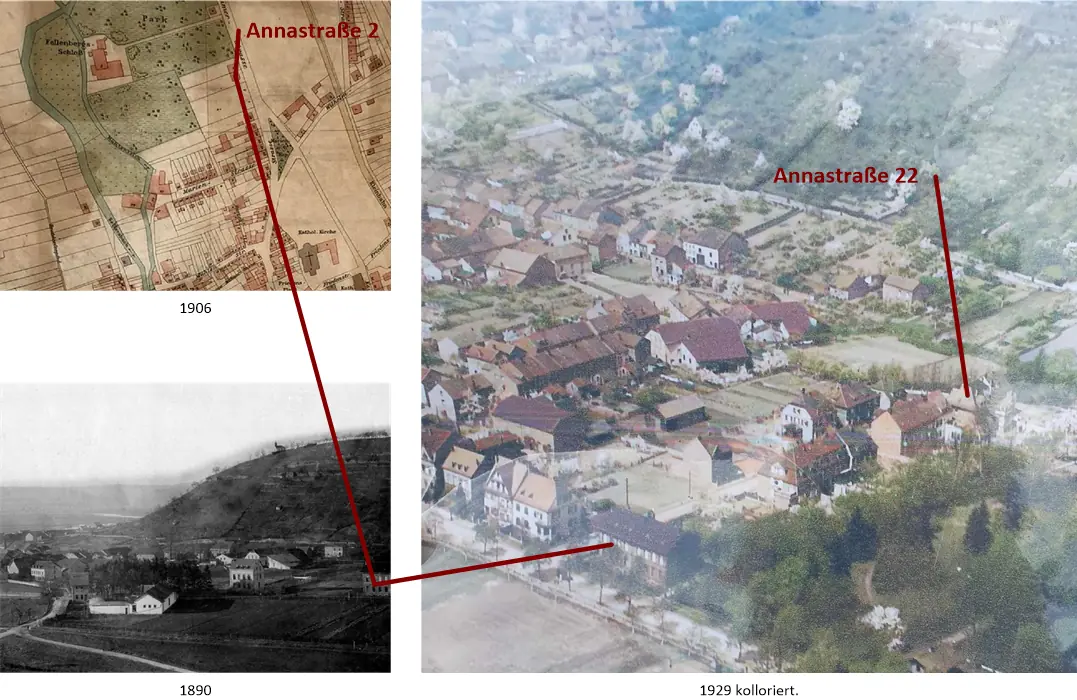
The site on which Annastraße was built in 1924 had previously belonged to the company Villeroy & Boch and was initially developed by factory employees. The building now known as Annastraße 2 already existed before 1924 and became Annastraße 2 when the street was created.
Annastraße is already shown on the 1925 town plan of Merzig. In its lower section, facing the Seffersbach, a building site is still marked on the plan. Development of the street began around 1924. There was a flurry of building activity in 1925–26, and most of the buildings on Annastraße were constructed during this period. The last residential building erected before the war was completed in 1938.
Annastraße, as described in 1951, is a lovely residential street. Wide pavements and front gardens abounding with flowers lend the street an elegant appearance. However, the last war, with its destruction, did not leave it unscathed: some houses were completely destroyed, whilst others were severely damaged. Thanks to the energy and diligence of the residents, most of the internal and external damage has now been repaired. In 1949–50, the Villeroy & Boch factory built a large, stately residential block for its employees on the site of the two bombed-out plots of land that had belonged to it. It is to be hoped that the adjacent ruin will also be rebuilt soon, so that the street can once again be seen in all its beauty.
The name ‘Fellenberg’
Swiss-born Wilhelm Tell von Fellenberg (*9 October 1798 – oo 27 May 1829 – † 22 March 188o) came to the Saar from Switzerland for love. In 1829, he married Anna Rosalie Virginie, daughter of François Boch-Buschmann. In 1858, he moved to Merzig and, according to tradition, converted an old, dilapidated mill into a stately castle, Fellenberg Castle. With its extension built of hewn sandstone, its bay windows and its turrets, Fellenberg Castle is a fine example of 19th-century architecture in Merzig. The Fellenbergs had no children, and the estate passed to the von Boch family.
From 1912 to 1919, the district administration rented Fellenberg Castle, and following extensive renovation, District Administrator Dr Haniel took up residence there. His successor, District Administrator Rudolf Klein, also lived in the castle. In 1934, the Merzig district purchased Fellenberg Castle and established a care home for the elderly; later, medical wards, such as the maternity ward, were also housed here. Many residents of Merzig were born here. Since 1980, Fellenberg Castle has housed a museum. Between 1997 and 2000, the castle underwent extensive renovation and restoration by the Merzig-Wadern district authority. The Fellenberg Castle Museum reopened on 22 September 2000 following several years of refurbishment.
The House
The ‘House’ at 22 and 24 Annastraße was granted planning permission on 6 August 1926 and was built by the firm M. Schmitt-Ney as a two-family house.
